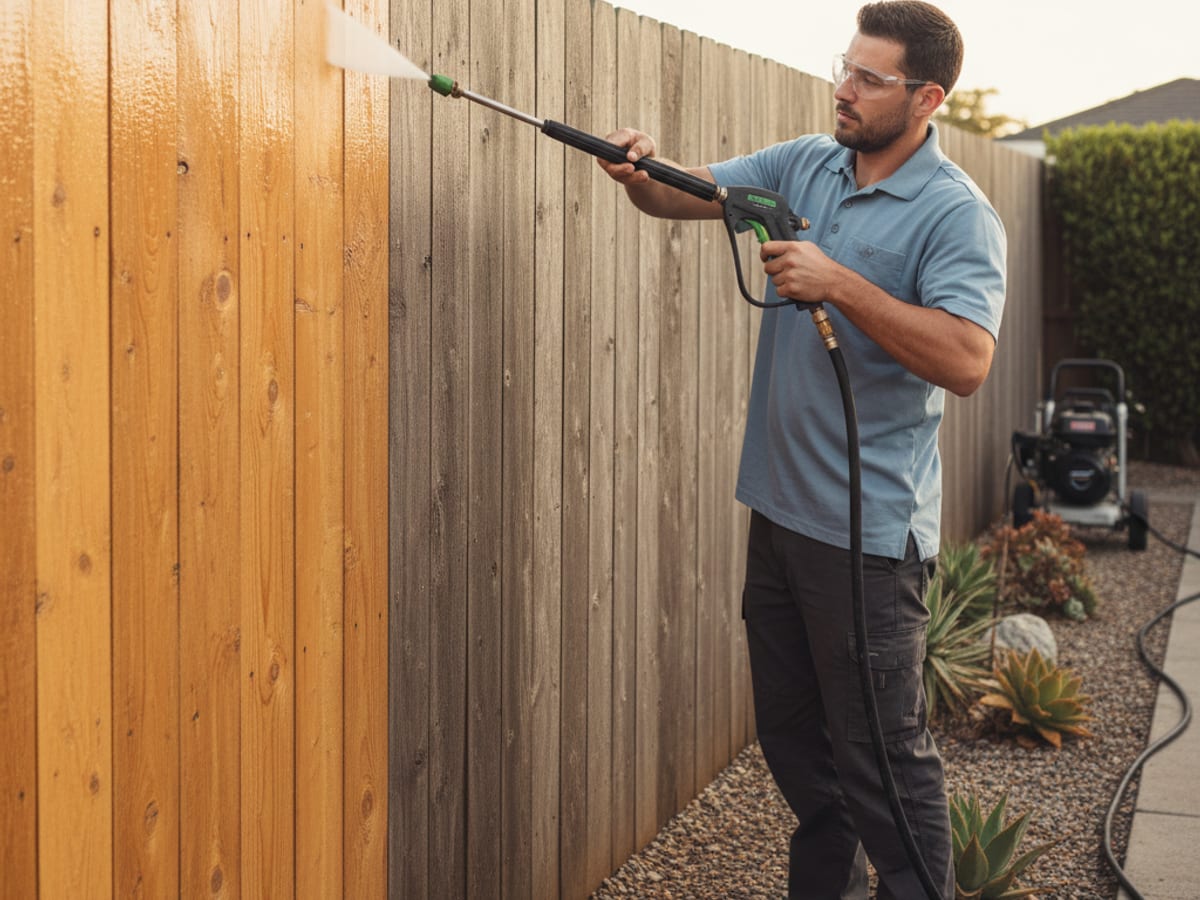
TL;DR
- Fence cleaning in San Diego runs about $110 to $300 for a typical yard, or $1.50 to $3.00 per linear foot for a 6-foot fence.
- Wood fences need low pressure or soft wash. High PSI splinters the grain and shortens the fence’s life.
- Vinyl and chain link take more pressure, but coastal mildew still needs chemistry to kill it at the root.
- The marine layer is why your fence grays out again two months after a blast-only wash.
- We give upfront quotes and follow San Diego stormwater rules on every job. Call (858) 925-5546.
Fence cleaning in San Diego costs about $110 to $300 for most homes, or roughly $1.50 to $3.00 per linear foot for a standard 6-foot fence. Wood usually lands at the higher end because it needs gentle treatment. The real question isn’t just price. It’s why your fence keeps turning gray, and why a quick blast wash never makes it last. Coastal humidity and the marine layer feed mildew faster here than almost anywhere else.
This guide gives you the real numbers, the right method for each fence material, and the San Diego-specific reasons your fence looks dingy in the first place.
What fence cleaning costs in San Diego
Most homeowners pay between $110 and $300 for a full fence cleaning. Pricing depends on the material, the length, the height, and how much mildew has set in. Here’s how the numbers break down by surface.
| Fence material | Per square foot | Per linear foot (6 ft) | Typical job total |
|---|---|---|---|
| Wood (softwood) | $0.35 to $0.50 | $2.10 to $3.00 | $150 to $300 |
| Wood (hardwood) | $0.35 to $0.50 | $2.10 to $3.00 | $125 to $235 |
| Vinyl | $0.25 to $0.35 | $1.50 to $2.10 | $100 to $250 |
| Chain link | $0.20 to $0.30 | $1.20 to $1.80 | $90 to $200 |
Deep cleaning heavy mildew or rust adds about $0.10 to $0.20 per square foot. San Diego’s coastal humidity can push the job higher, because the growth on a beach-adjacent fence is thicker than the same fence inland. A fence in Encinitas or Ocean Beach often needs more chemistry than one in El Cajon.
Two things move the price most: how tall the fence is, and how bad the staining got before you called. Annual cleaning is cheaper than waiting three years and fighting set-in algae.
Why San Diego fences gray out so fast
The marine layer is the answer. That low coastal fog rolls in most mornings, settles moisture on every outdoor surface, and creates the exact damp, shaded conditions that mildew and algae love. The gray-green film you see isn’t dirt. It’s living growth.
This matters because of how you treat it. A pressure washer blasts the visible growth off the surface, and the fence looks clean for a few weeks. Then the spores left behind in the wood grain bloom again, often faster than before, because the high pressure roughened the surface and gave them more to grip. Coastal fences re-stain the quickest.
Inland heat and hard water cause a different problem. San Diego’s hard water leaves mineral spotting on vinyl and chain link, and dries out wood faster. So a fence in Poway weathers differently than one in La Jolla, but both need more than a one-and-done blast.
How to clean each fence material
The mistake most people make is using one method for every fence. Pressure that’s right for chain link will destroy a cedar plank.
Wood. Use low pressure or soft wash. Wood is soft and fibrous, and high PSI tears the grain, raises splinters, and leaves wand marks that never sand out. Soft washing uses a mild cleaning solution to kill the mildew at the root, then a gentle rinse. That’s why it lasts. We cover the full method in our soft wash house guide, and the same chemistry-first logic applies to wood fences.
Vinyl. Vinyl handles moderate pressure, but mildew still needs chemistry. Blasting alone strips the surface film and leaves the spores. A cleaning solution dwell plus a rinse gets it actually clean and keeps it clean longer. Watch for hard water spotting after, which is common across inland San Diego.
Chain link. The most forgiving material. Higher pressure is fine on the metal itself, but rust at the base needs a targeted approach, not just water. If your fence has rust runoff staining the concrete or stucco below it, that’s a separate fix.
Whatever the material, the principle is the same one that separates pressure washing from soft washing. If you want the full breakdown, see pressure washing vs power washing vs soft washing.
The stormwater rule most people miss
San Diego treats fence-cleaning runoff as a regulated discharge. Wash water carrying cleaning chemicals, mildew, and debris isn’t allowed to flow into the street, gutter, or storm drain. Those drains run straight to the ocean, untreated.
For a homeowner doing a small fence with plain water, this is low risk. For a contractor using chemistry across a long fence line, it’s a real rule with real consequences. A compliant crew contains or filters the runoff and keeps it out of the storm drain. We follow these practices on every job. If you want the detail, read our San Diego stormwater compliance guide.
DIY or hire a pro
A short vinyl or chain-link fence is a reasonable weekend job if you own or rent a pressure washer and you’re careful with the settings. The cost is mostly your time plus rental.
Wood is where DIY goes wrong. The pressure that feels productive is the same pressure that gouges the grain. If your fence is wood, two-sided, or longer than a single run, a pro soft wash usually costs less than replacing planks you damaged. And a pro handles the stormwater containment that a garden setup can’t.
If your fence shares a property line, check your HOA rules first. Some San Diego HOAs require both neighbors’ consent before cleaning a shared fence, and a few specify approved methods.
When to clean your fence
Once a year is the right cadence for most San Diego fences. Coastal homes within a mile or two of the water often need it more, because the marine layer keeps the wood damp. Annual cleaning is also cheaper, since you’re never fighting years of set-in growth.
The same yearly rhythm applies to most exterior surfaces here. We walk through the full schedule in how often to pressure wash your house.
Frequently asked questions
How much does fence cleaning cost in San Diego? Most homeowners pay $110 to $300 for a full fence cleaning, or about $1.50 to $3.00 per linear foot for a 6-foot fence. Wood runs higher because it needs gentle, slower treatment. Heavy mildew or rust adds to the total.
Will pressure washing damage my wood fence? It can. High pressure tears wood grain, raises splinters, and leaves permanent wand marks. Wood fences should be soft washed at low pressure, which cleans deeper and lasts longer without the damage.
Why does my fence turn gray again so quickly? San Diego’s marine layer keeps fences damp, which feeds mildew and algae. A blast-only wash removes the visible growth but leaves the spores, so it comes back fast. Soft washing kills it at the root for a longer-lasting result.
Do I need to worry about wash water running into the street? Yes, if you’re using cleaning chemicals. San Diego stormwater rules prohibit chemical runoff into storm drains, which flow untreated to the ocean. A compliant crew contains the runoff. For a small plain-water job, the risk is low.
Can I clean a fence I share with my neighbor? Usually, but check your HOA rules first. Some San Diego HOAs require both neighbors to agree before a shared fence is cleaned, and a few specify the method.
How often should I have my fence cleaned? Once a year for most San Diego homes. Coastal properties closer to the water often need it more because of constant moisture. Annual cleaning costs less than letting growth set in for years.
Get an upfront quote
We clean fences across San Diego County, from the coast to the inland valleys, and we quote the price before we start. No surprises, no upcharge after the job. Wood gets the soft-wash treatment it needs, and every job follows San Diego stormwater rules.
Want a number for your fence? See our fence cleaning service or call (858) 925-5546 for an upfront quote.