TL;DR
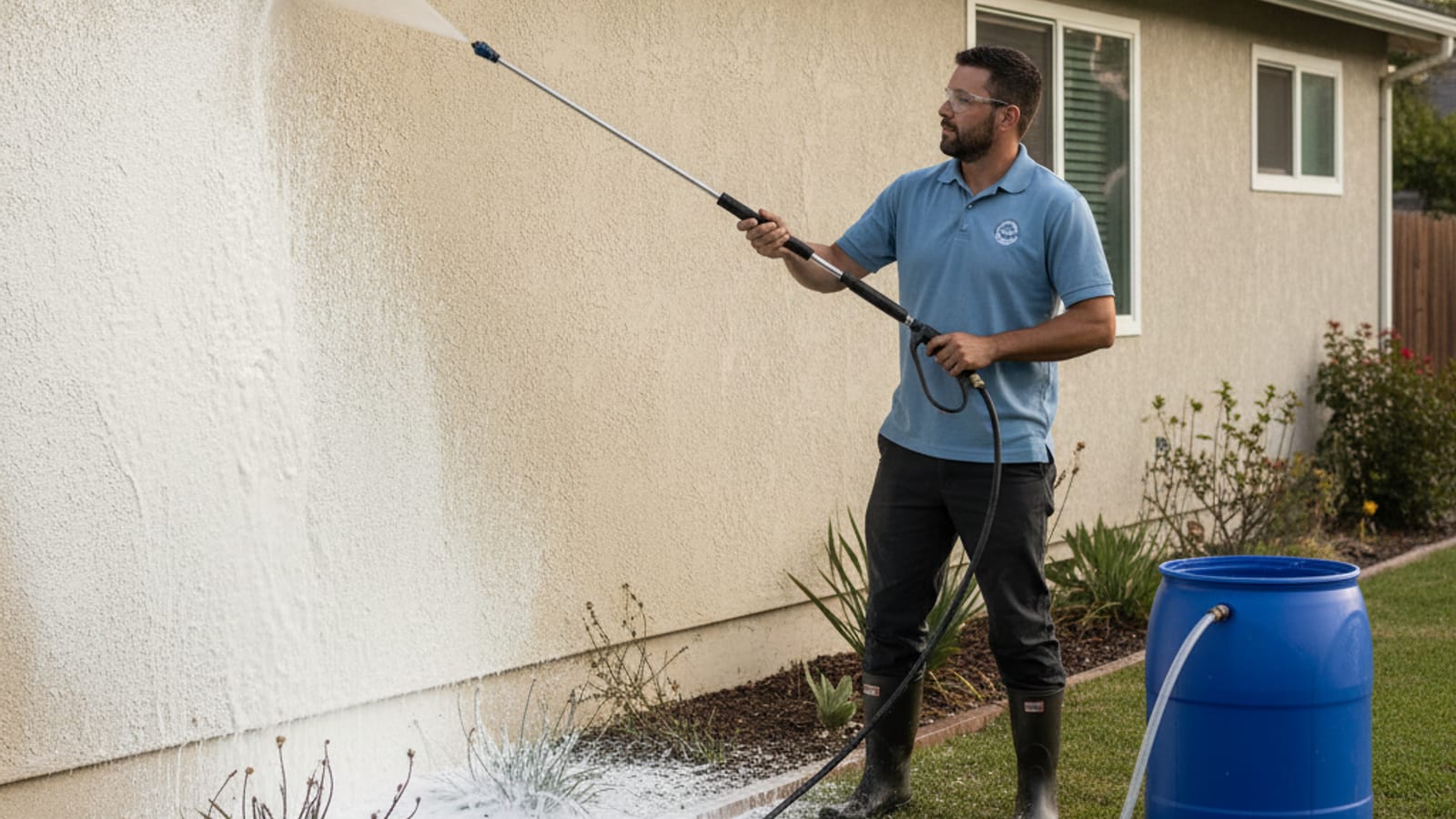
- Soft washing uses a mild sodium-hypochlorite-and-surfactant mix at low pressure (around 60 PSI) to kill algae at the root.
- Chemistry: 1% to 2% SH solution plus a quality surfactant cling agent. Stronger on stucco, weaker on painted wood.
- Dwell time is the critical variable, 5 to 10 minutes, never let it dry.
- Pre-wet and post-rinse landscaping. Seriously. Bleach burns plants fast.
- DIY is doable with a pump-up sprayer for a single-story. Two-story almost always needs a pro rig.
Soft washing sounds like a marketing upgrade for regular pressure washing. It isn’t. It’s a different method entirely, one that uses chemistry instead of force, produces results that last three to five years instead of three to five weeks, and is the only correct way to clean stucco, vinyl, painted wood, and anything with algae staining. Here’s exactly how to soft wash a house the right way, including the mistakes that turn a good-idea Saturday into a repaint.
This guide covers the method whether you’re doing it yourself on a single-story or you’re trying to understand what a pro should be doing on a two-story. Either way, the principles are the same. Only the equipment scales up.
What soft washing actually is
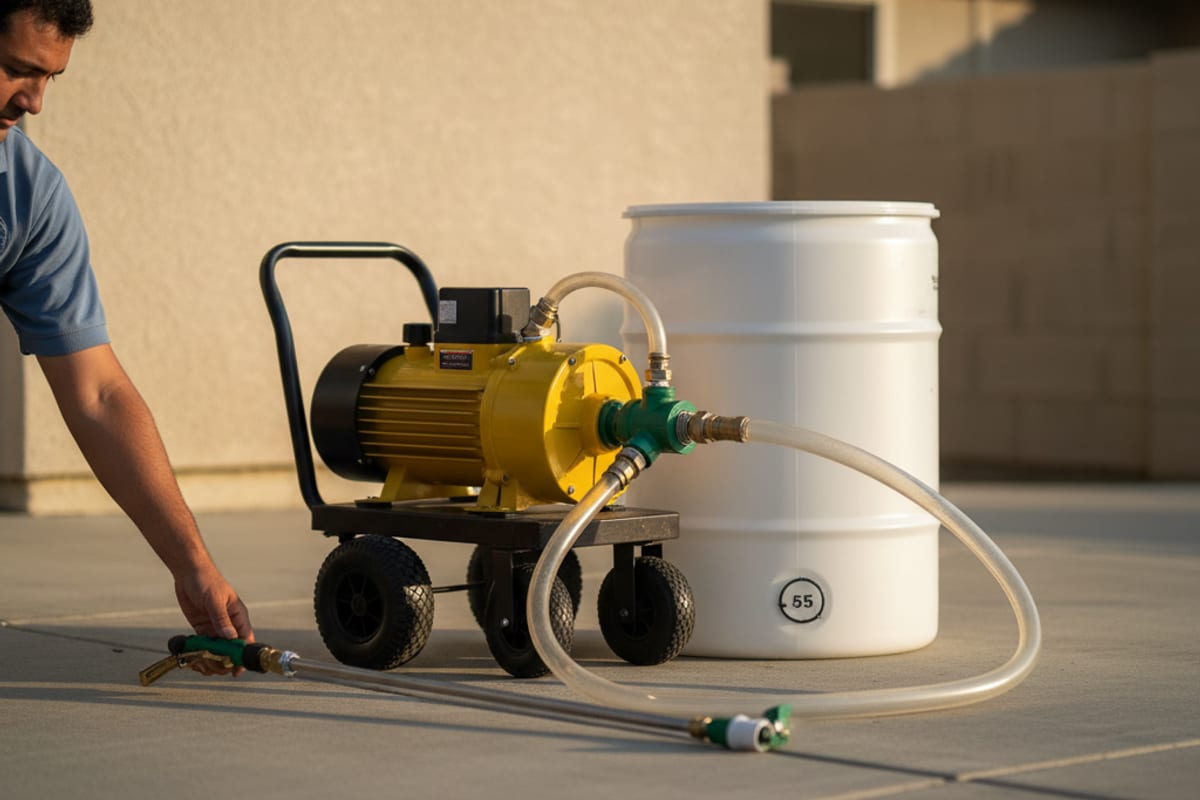
A soft-wash system has three parts: a low-pressure pump (around 60 PSI, about a tenth of what a pressure washer produces), a long wand with a proportioner tip that mixes cleaner and rinse water on the fly, and a supply of cleaning chemistry, usually a blend of 12.5% sodium hypochlorite (pool shock), surfactant (a cling agent), and water.
The chemistry is what does the work. Sodium hypochlorite at 1 to 2 percent concentration kills algae (gloeocapsa magma), mildew, and mold at the cellular level. Surfactant makes the mixture stick to vertical surfaces long enough to work, without it, the solution runs off in 30 seconds. The low-pressure water just rinses the dead material off afterward.
Compare that to pressure washing, which blasts the visible algae off a surface but doesn’t kill the spores underneath. Three to six weeks later, the black streaks come back, often worse, because the spores are now embedded in a roughed-up surface. That’s why pressure-washed stucco in San Diego’s coastal zone tends to re-stain faster than it ever did before the first cleaning.
Equipment you need (DIY version)
For a single-story home, you can soft wash without a pro rig. Here’s the minimum kit:
- 2-gallon pump-up sprayer. Plastic, acid-and-bleach compatible. About $20 at a hardware store.
- Fan-tip wand. The cheap plastic wand that comes with the sprayer is fine, but a brass adjustable tip works better.
- Mixing bucket with measuring cup. For dilution.
- Garden hose. For rinsing.
- Soft-bristle long-handled brush. For occasional spot scrubbing.
- Safety glasses and nitrile gloves. Non-negotiable.
- Drop cloths or painter’s plastic. For protecting anything precious underneath the work area.
Total kit: about $75 to $100. For a two-story home, a pro-grade 12-volt diaphragm pump and 18-foot telescoping wand start around $600, which is why most two-story homes make more financial sense to just have washed by a house washing pro.
Chemistry: mixing the right strength
The industry-standard soft-wash mix is 1% to 2% sodium hypochlorite with 1 to 2 ounces of surfactant per gallon of finished solution.
Starting from 12.5% pool shock (available at any pool supply store), the dilution math is:
- 1% final strength: 1 part pool shock to 11.5 parts water. For 2 gallons finished: 11 oz pool shock + 245 oz water.
- 1.5% final strength: 1 part pool shock to 7.3 parts water. For 2 gallons finished: 16 oz pool shock + 240 oz water.
- 2% final strength: 1 part pool shock to 5.25 parts water. For 2 gallons finished: 21 oz pool shock + 235 oz water.
Add the surfactant last. Pros use products like Southeast Softwash’s “Apple Sauce” or Pressure-Tek’s elemonator. For DIY, plain dish soap is sometimes recommended online, avoid it. Dish soap doesn’t cling the way a true surfactant does, and it leaves a film. A small bottle of dedicated soft-wash surfactant is $15 and lasts through many jobs.
Mixing guidance for different siding types:
- Stucco and Hardie board: 1.5% to 2% works well. These surfaces are porous and need the stronger mix.
- Vinyl siding: 1% to 1.5%. Too strong and you’ll streak the color downward.
- Painted wood, older paint: Start at 1%. Test a small area first. Older paint with oxidation can dull further if the mix is too strong.
- Aluminum siding or trim: 0.5% to 1%. Sodium hypochlorite will oxidize aluminum if it sits too long. Rinse fast.
Never mix sodium hypochlorite with any acid, ammonia-based cleaner, or other oxidizer. The resulting gases are genuinely dangerous.
Step-by-step: soft washing a single-story home
1. Pick a day
Cool, overcast, no wind. San Diego has a lot of these, June Gloom mornings are ideal. Hot direct sun evaporates the chemistry too fast (it flashes off before working). Wind carries the mist onto your neighbor’s car. Rain within 2 hours of application rinses it off before it does its job.
2. Prep the site
- Close every window and door. Every single one.
- Move patio furniture, BBQ grill, bikes, toys at least 10 feet from the walls.
- Cover any outdoor electrical outlets with plastic taped in place.
- Cover HVAC condenser units with a trash bag.
- Pre-wet all landscaping within 10 feet of the walls with plain water. Soak it thoroughly, leaves, soil, mulch. This dilutes any chemistry that drifts or drips onto it.
- Let the neighbors know if you’re near a shared fence line.
3. Apply the mix
Fill your pump-up sprayer with the mixed solution. Pump to pressure. Starting at the bottom of one wall and working up, apply an even, moderate coat of solution. You want visible coverage, foamy wherever you can see the surfactant, but not dripping runoff.
Why bottom-up? If you start at the top, runoff streaks down dry siding, leaves clean stripes, and you can’t tell where you’ve already been. Bottom-up gives you even coverage with no streak ghosts.
Work in 15-to-20-foot sections at a time so the chemistry doesn’t dry out before you rinse.
4. Dwell
5 to 10 minutes of dwell time is the sweet spot. Less than 5 and the chemistry hasn’t fully killed the algae. More than 10 in direct sun and it starts drying, which means it loses most of its effectiveness.
Watch the siding during dwell. Black streaks should start looking lighter, not disappearing yet, just fading. That tells you the chemistry is working.
If it’s drying too fast (dry spots showing in the foam before 5 minutes), mist that section again with more solution. Don’t let it dry on the wall.
5. Rinse with low pressure
Use a garden hose with a spray nozzle on the wide-fan setting, not the jet. Work top-down this time. A slow, even rinse from the top of the wall down to the ground. You’re not scrubbing anything off; you’re flushing the dead algae and residual chemistry off the siding.
Rinse each section until runoff water runs clear. Then rinse the ground at the base of the walls. Then rinse the landscaping you pre-wetted.
6. Rinse your gear
Disassemble the pump-up sprayer and flush it with clean water. Sodium hypochlorite eats rubber gaskets over time. A clean rinse after each job doubles the sprayer’s life.
Mistakes that cost money
Skipping landscaping pre-wet. Bleach burns plants. Hydrangeas, ferns, and succulents are the most sensitive. Pre-wet, post-rinse, and mist periodically during dwell.
Using too strong a mix on painted wood. If the paint is older than 10 years, start at 0.5% and test a small area first. Chalky oxidation on old paint can lift visibly if the mix is too hot.
Letting it dry on windows. Dried sodium hypochlorite leaves a visible haze on glass that’s a pain to remove later. Cover windows, or at minimum rinse them fast.
Doing it in direct hot sun. The mix flashes off before dwelling. Wait for afternoon shade on that elevation, or pick an overcast morning.
Standing on a ladder with a 10-foot wand. Get a 12- or 18-foot telescoping wand from a pressure-washing supplier. Ladders and soft-wash chemistry don’t mix. We’ve seen more than one homeowner end up in an ER over a ladder slip during a soft wash.
When to hire a pro
DIY single-story with a pump-up sprayer is doable and will save $200 to $400. DIY two-story almost always isn’t worth it, renting the pump is nearly as expensive as hiring a pro, and a 20-foot wand is unwieldy from the ground.
Hire a pro if any of these apply:
- Two-story or taller home
- Heavy coastal algae, those long vertical black streaks everywhere
- Painted wood older than 15 years (safer to have someone who’s done it before)
- You don’t want to spend a Saturday doing it
- You want a written warranty that the black streaks won’t come back for 24 months
A proper house wash from us uses pro-grade 12V equipment, professional-strength chemistry calibrated per siding type, pre-wetted and post-rinsed landscaping, and a two-year no-re-streak guarantee. Most San Diego homes fall in the $300 to $600 range.
Need a quote? Call (858) 925-5546 or send photos through our contact form. Upfront pricing and fast response. We serve all of San Diego County, from Oceanside to Imperial Beach and inland to Alpine.