TL;DR
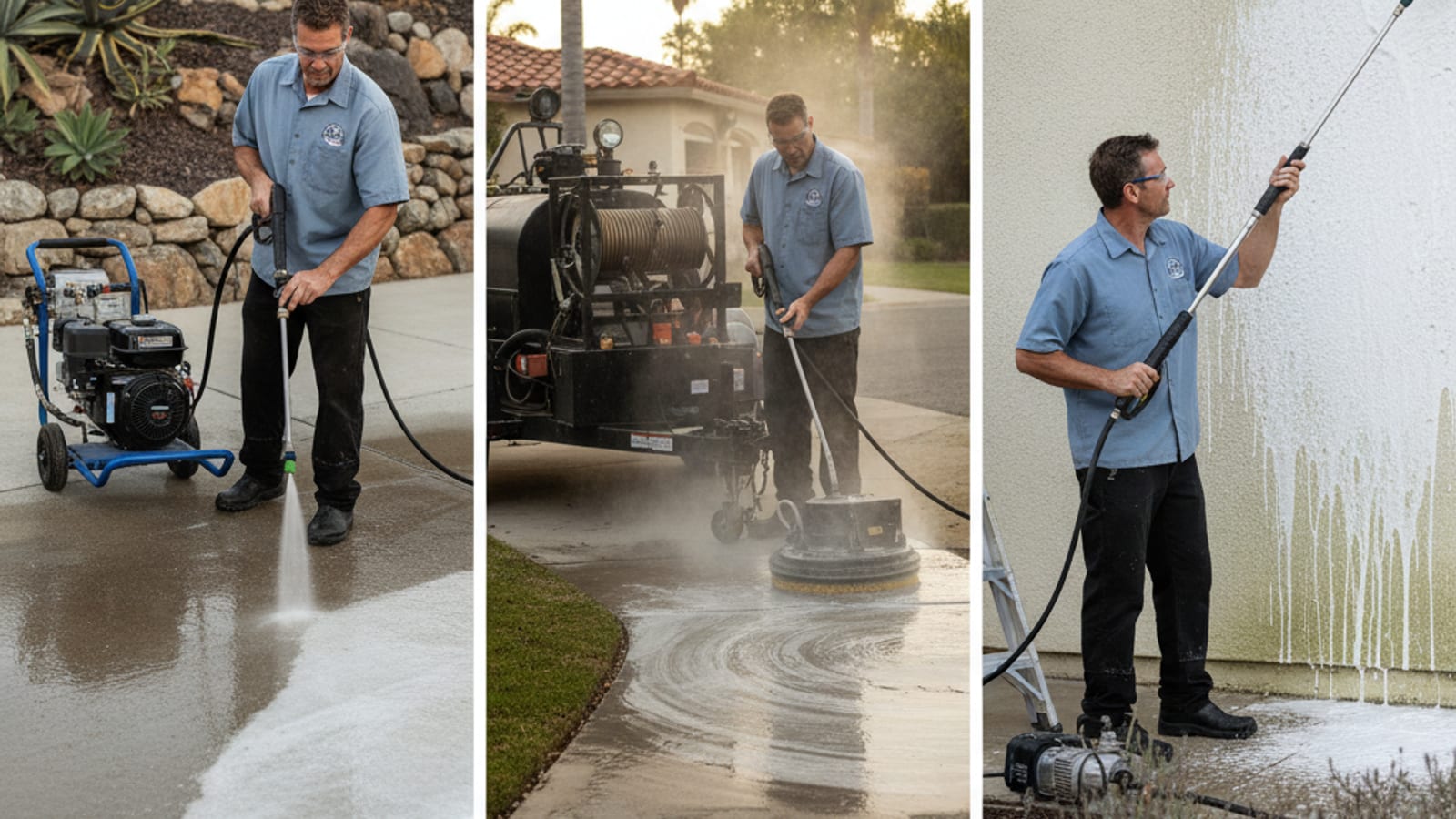
- Pressure washing uses cold water at high PSI. Power washing is the same machine with a heated water output. Soft washing uses very low pressure plus detergent chemistry.
- Hot water strips oil, grease, gum, and baked-on grime faster than cold. Cold water handles dirt, mud, and loose debris just fine.
- Roofs, stucco, painted wood, and anything with algae staining need soft wash, high pressure damages the surface and doesn’t kill the algae anyway.
- If someone quotes you “pressure washing your roof,” get a different quote. Asphalt shingle roofs require soft wash per ARMA guidance.
You’ve seen all three terms on quotes, truck wraps, and Yelp listings. Pressure washing, power washing, soft washing. Most homeowners assume they’re the same thing with different marketing names. They aren’t. The difference in pressure washing vs power washing comes down to water temperature, and soft washing is a completely different tool entirely, one that uses almost no pressure and relies on chemistry to do the work.
Here’s what each method actually does, when each one is the right call, and why using the wrong one is how stucco gets torn off walls and asphalt shingles lose 20 years of life in 20 minutes.
Pressure washing: cold water, high PSI
Pressure washing is what most people picture. A gas or electric pump pulls cold water from a garden hose, boosts it to somewhere between 1,300 and 4,000 PSI, and fires it through a nozzle at the surface. No heat. No chemistry (usually). Just mechanical force.
Cold pressure is great for:
- Concrete driveways with general dirt, tire marks, and loose grime
- Brick walkways and unfinished patios
- Fence lines after the winter rains
- Stripping flaking paint before repainting
- Clearing mud after yard work
Cold pressure is bad for:
- Oil stains (water alone won’t lift petroleum)
- Algae or mildew staining (you’ll blast the surface off and the algae grows back in weeks)
- Stucco, painted wood, vinyl siding, asphalt shingles, aging mortar joints
A good consumer pressure washer tops out around 2,300 PSI, think Ryobi electric or a 2,000 PSI Kärcher. Professional gas units from Simpson or Pressure-Tek run 3,500 to 4,000 PSI at 4 to 5 GPM. The GPM number matters more than PSI for actual cleaning speed, higher flow rinses faster.
Power washing: the same machine, but hot
Power washing uses the same pump and nozzles as pressure washing, but with one critical addition, a diesel- or propane-fired burner heats the water to somewhere between 160°F and 250°F before it hits the surface.
That heat changes everything. Hot water:
- Dissolves oil, grease, and gum in seconds instead of minutes
- Breaks up baked-on dirt that cold water slides right past
- Cuts cleaning time on grimy concrete roughly in half
- Steams away bacteria and mildew, not just the visible staining
Power washing is the right tool for:
- Commercial kitchens and restaurant dumpster pads
- Gas station concrete and mechanic shop floors
- Gum-spotted sidewalks in front of retail storefronts
- Any concrete with embedded grease or heavy organic buildup
A commercial hot-water rig costs $8,000 to $18,000 and weighs 600 pounds. That’s why almost no homeowners own one, and why the price per square foot for hot-water jobs runs 40 to 60 percent higher than cold. You’re paying for the equipment, the fuel, and the time saved.
For most residential cleaning in San Diego, cold water does the job. For restaurant work, heavy automotive staining, and pre-painting prep on slick surfaces, hot water earns its price.
Soft washing: chemistry, not force
Soft washing is the one most homeowners have never heard of, and the one that matters most for the biggest mistakes we see.
A soft-wash setup uses a pump that produces around 60 PSI, less than your garden hose. The wand is long, usually 12 to 18 feet, and shaped like a pair of parallel pipes with a proportioner tip. One line carries a surfactant-and-sodium-hypochlorite solution (essentially a mild bleach blend with cling agents), the other carries rinse water. The detergent mix sits on the surface for 5 to 10 minutes, kills algae and mold at the root, and then gets rinsed off with that same low-pressure stream.
Soft washing is the only correct method for:
- Asphalt shingle roofs (ARMA, the Asphalt Roofing Manufacturers Association, specifically recommends low-pressure chlorine cleaning, not pressure washing)
- Stucco and painted siding
- Vinyl and cedar-lap siding
- Window and screen frames
- Composite deck boards like Trex and Fiberon
- Anywhere you see black streaking (that’s gloeocapsa magma algae, pressure won’t kill it)
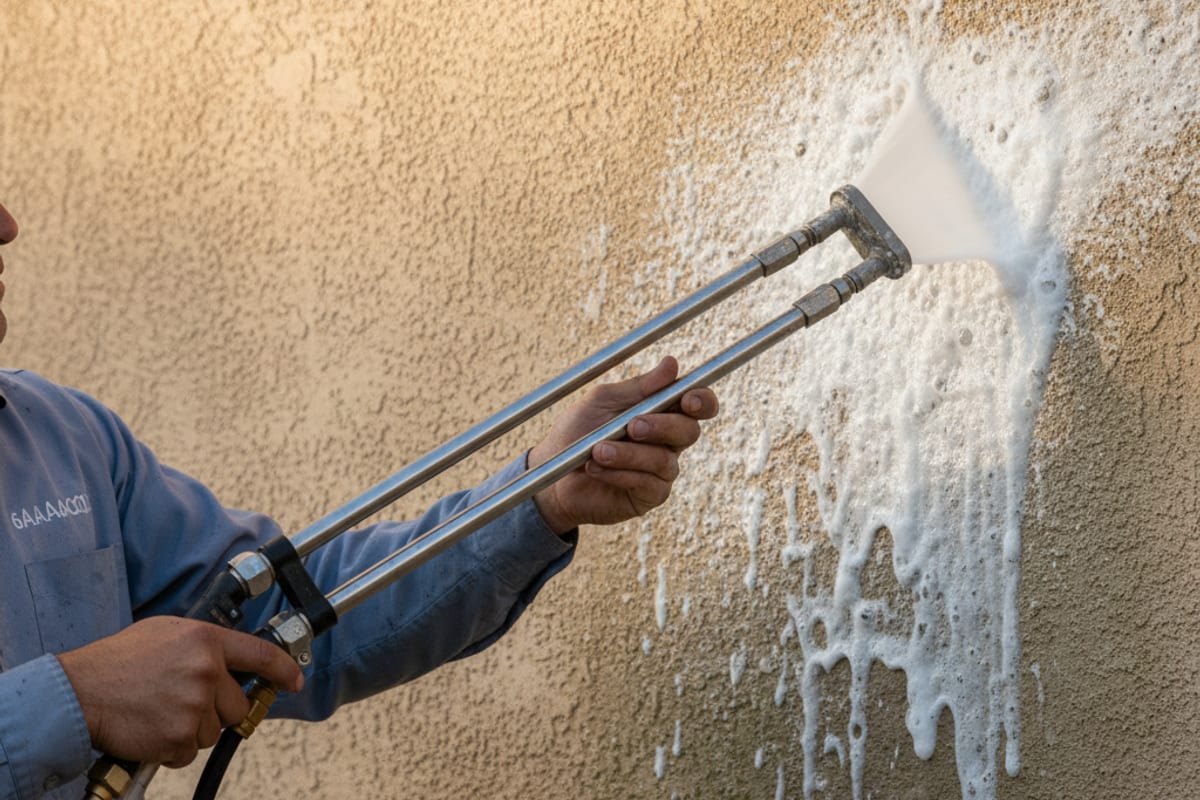
Pro softwash rigs from Southeast Softwash and Pressure-Tek use 12-volt diaphragm pumps and dedicated bulk-chem totes. The chemistry is the real work. Pressure is just how we rinse.
Why using the wrong method is a problem in San Diego
San Diego’s coastal strip has a specific problem, marine layer moisture plus warm afternoons is ideal algae weather. You see it on north-facing stucco in Encinitas, shingle roofs in La Jolla, and painted wood fences from Oceanside down to Imperial Beach. That black streaking isn’t dirt. It’s a living colony.
Hit it with a 3,500 PSI cold wash and three things happen. The visible staining goes away for a month. The top layer of stucco pops off in a fine mist you can feel on your face. And the algae spores, now embedded in the roughed-up surface, grow back thicker than before. We see it all the time on stucco walls that were “pressure washed” by someone’s cousin with a rental unit from Home Depot.
Meanwhile, a proper roof soft wash service uses zero impact pressure, kills the algae at the root, and stays clean for three to five years. Same job, opposite outcome.
What method do the pros actually use for each surface?
Here’s a quick reference for common San Diego exterior surfaces:
- Concrete driveway, general dirt: Cold pressure wash with a surface cleaner attachment. Fast, effective, no chemistry needed.
- Concrete with oil stains: Cold pressure wash plus a targeted degreaser like EBC chemistry on the stain, then hot water if available.
- Stucco house exterior: Soft wash. Always.
- Asphalt shingle roof: Soft wash only. No exceptions.
- Tile roof (clay or concrete): Soft wash for the biological staining, occasionally a very low-pressure rinse for dust, never a direct blast.
- Painted wood fence: Soft wash first, rinse with low pressure.
- Bare cedar fence you want to restore: Cold pressure wash at 25-degree green tip, with the grain. Mid pressure only.
- Composite deck (Trex/Fiberon): Soft wash. High pressure voids the warranty on most brands.
- Paver patio: Cold pressure with a surface cleaner, followed by re-sanding with polymeric sand (Alliance Gator or SEK brand) and sealing.
- Rust stains on concrete: Specialty chemistry. F9 Barc is the industry standard. Pressure alone does nothing.
- Restaurant dumpster pad: Hot water (power washing) plus degreaser. The only method that keeps the smell down.
What to ask a pressure washing company before hiring
Three questions separate the pros from the liability cases:
- “What method do you use on my roof/stucco/deck?” If the answer involves PSI numbers for asphalt shingles, hang up. The answer should always be “soft wash” for those surfaces.
- “Do you carry general liability and workers’ comp?” Any company on a ladder cleaning your gutters should have both. Ask for the certificate.
- “Can you share recent local references?” Pressure washing is cleaning work, so California has no state contractor license for it. That means anyone can buy a machine and start knocking on doors. Recent jobs in your neighborhood, marked vehicles, and a written flat-rate quote are the real credibility signals.
For home exterior jobs specifically, our house wash service uses soft-wash methodology on stucco, vinyl, and painted surfaces, mild chemistry, low pressure, three-year typical re-soil interval on the coast.
Which one do you actually need?
Nine times out of ten, the answer for a San Diego home is:
- Driveway, patio, hardscape: pressure washing (cold, surface cleaner, surfactant for heavy spots).
- House siding, roof, painted wood, anything with black streaks: soft washing.
- Commercial concrete, restaurants, gas stations: power washing (hot water).
If you’re not sure, measure the surface, take a picture of the staining, and send it to us for a written estimate. Better to get the method right the first time than to strip paint off your house and spend $4,000 on a repaint.
Ready to get it done right? Call (858) 925-5546 or book online. Upfront pricing and fast response. Serving all of San Diego County, coast to inland.