TL;DR
- Wood decks need low pressure (500 to 1,200 PSI max) and a wide-angle tip (40-degree white or wider), held back at least 12 inches, moving with the grain.
- Use a sodium percarbonate oxygenated cleaner for dirt and mildew, followed by a wood brightener (oxalic acid) to neutralize and restore color.
- Let the deck dry fully, 24 to 48 hours of dry weather minimum, before applying stain or sealer, or the finish won’t bond.
- Going against the grain, using a zero or 15-degree tip, or sealing damp wood are the three mistakes that cause most DIY deck cleaning failures.
Most San Diego wood decks look gray and weathered within two or three years. The color change is UV oxidation, not just dirt, and a garden hose alone won’t fix it. A pressure washer will, but only if you use the right pressure and chemistry. Get it wrong and you’re looking at a fuzzy, gouged deck that soaks up stain unevenly and peels within a season.
Here’s exactly how to clean a wood deck safely, whether you’re prepping it for a fresh coat of stain, refreshing the look before summer, or just clearing off a winter’s worth of marine-layer mildew from a coastal Encinitas or Carlsbad home.
Why pressure matters more on wood than on concrete
Concrete is dense and hard. Wood is not. The grain structure of a cedar or redwood board has two distinct parts: dense late wood (the darker rings) and soft spring wood (the lighter rings between them). High pressure erodes the soft spring wood faster than the hard rings, leaving a washboard texture you can feel with your fingers. That texture is called grain raise or “fuzzing,” and once it happens you have to sand the whole deck before you can stain it.
The other problem is lap marks. On concrete you can be sloppy with your overlap because the surface doesn’t absorb the pressure unevenly. On wood, a half-second pause with the wand angled wrong leaves a visible lighter streak. Those marks show through most semi-transparent stains.
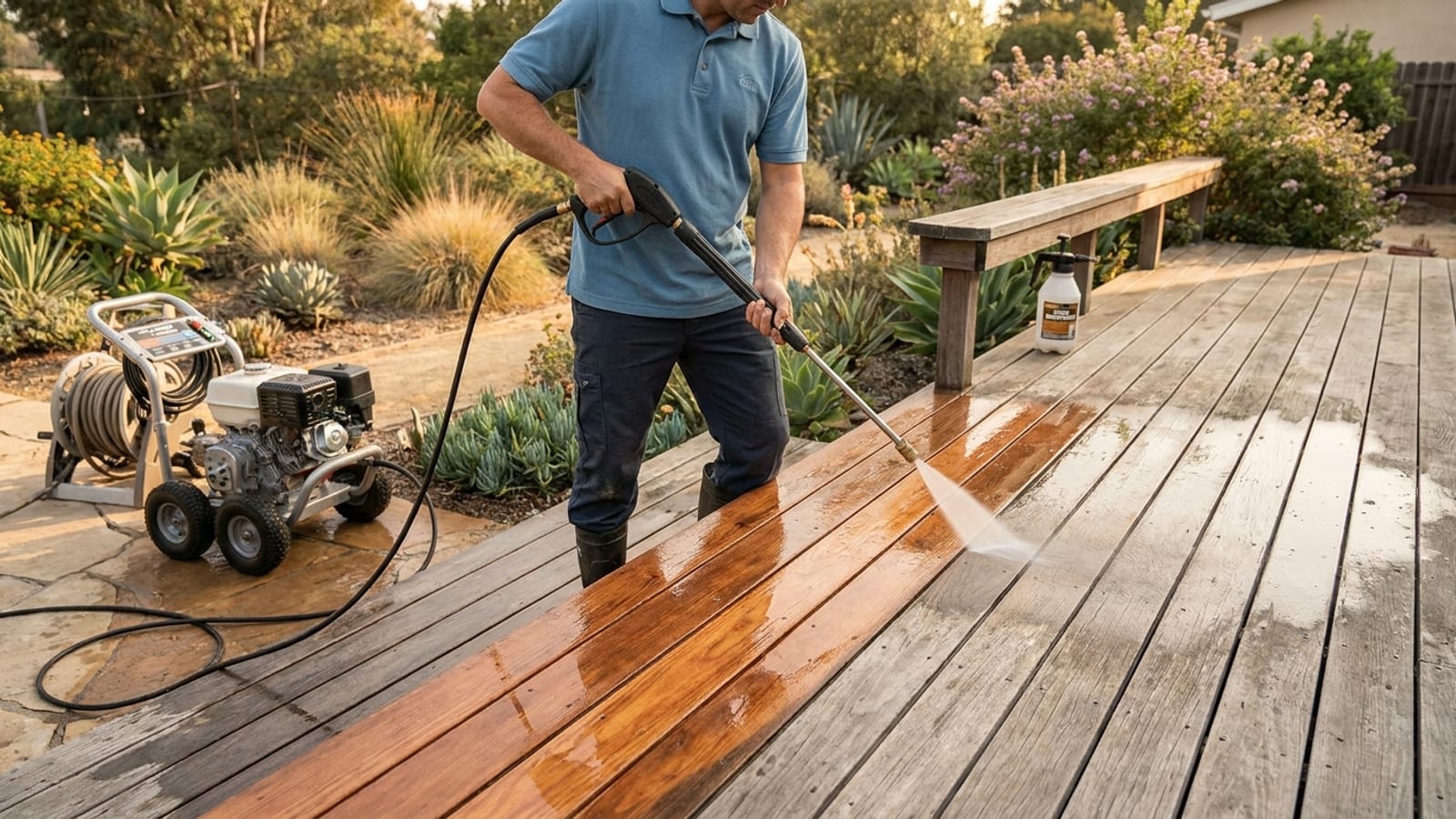
Safe pressure range for most wood decks is 500 to 1,200 PSI. A 40-degree white tip held 12 to 18 inches from the surface is the starting point. For softer cedar and older redwood, go to a 65-degree soaker tip or the soap-injection setting on your machine, which drops pressure even further. Save the green 25-degree tip for stubborn spots on hard pressure-treated pine only, and never use yellow (15-degree) or red (zero-degree) tips on any wood deck.
Wood types you’ll find on San Diego decks
Knowing what your deck is made of changes how you clean it.
Cedar. Common on older San Diego homes, especially in Poway, Rancho Bernardo, and North County inland areas. Cedar is aromatic and naturally resistant to rot, but it’s soft. It fades silver-gray fast in San Diego’s UV intensity. Responds well to oxygenated cleaners and takes stain beautifully when properly prepped.
Redwood. Premium material, found on higher-end homes in La Jolla and coastal Encinitas. Similar softness to cedar. The rich red tone comes back dramatically after a good cleaning and brightening. Because redwood tannins react with iron, any steel hardware contact leaves black stains that need oxalic acid (wood brightener) to remove.
Pressure-treated pine. The workhorse deck material for most of San Diego’s housing stock built since the 1990s. Denser than cedar or redwood, so it can handle slightly more pressure. The green tint from the preservative fades over time. Mildew and algae love it in coastal ZIP codes where marine-layer humidity stays high from May through August.
Composite decking. Not wood, not covered here. Composite gets deck and patio cleaning treatment with low pressure and no harsh chemicals that could discolor the polymer surface.
The chemistry: what to use and why
Two products do the actual cleaning work on wood. Most hardware store “deck wash” products combine both into one step, but using them separately gives you more control and better results.
Oxygenated cleaner (sodium percarbonate). This is the cleaning step. Products like Defy Wood Cleaner or Wolman Deck & Fence Cleaner use sodium percarbonate as the active ingredient. When you mix it with water, it releases oxygen that breaks up mildew, algae, dirt, and graying oxidation. It’s gentler than bleach-based products and won’t strip the wood fibers or kill nearby plantings when properly diluted and rinsed.
Standard mix is 1 cup of sodium percarbonate per gallon of warm water. For heavy mildew, go to 1.5 cups. Apply with a pump-up sprayer or a soft brush.
Wood brightener (oxalic acid). This is the finishing step, and most DIYers skip it entirely, which is why their decks still look dull after cleaning. Oxalic acid does two things: it neutralizes the alkaline residue left by the oxygenated cleaner, and it lifts the gray oxidation and tannin staining that cleaning alone can’t fully remove. The result is wood that looks close to new, with the original color back.
Products like Defy Wood Brightener or Armstrong Clark Wood Brightener are oxalic-acid-based. Mix per label, usually about 4 ounces per gallon of water. Apply after rinsing the cleaner, let it dwell a few minutes, then rinse again.
Do not mix these two products together. Apply cleaner first, rinse fully, then apply brightener.
Step-by-step: how to clean a wood deck
1. Clear and sweep
Move all furniture, planters, and grills off the deck. Sweep thoroughly with a stiff broom. Check between deck boards for debris buildup, clogged gaps hold moisture and are a leading cause of rot under San Diego coastal decks.
2. Protect surroundings
Pre-wet any plants or lawn around the deck perimeter with plain water. The oxygenated cleaner is gentler than bleach but will still burn stressed or dry plants if it sits on them. Lay plastic sheeting over any sensitive landscaping if needed.
3. Apply oxygenated cleaner
Mix your sodium percarbonate cleaner and load it into a pump-up sprayer. Apply evenly across the deck boards, working with the grain direction, starting from the far end and working back toward the exit. Keep the surface wet. Don’t let it dry before you scrub.
Let the cleaner dwell for 10 to 15 minutes. You’ll see mildew areas start to lighten. On heavily oxidized gray cedar, the original tan or pinkish tone may start showing through.
4. Scrub with the grain
Use a stiff-bristle deck brush (not a wire brush) and scrub with the grain direction of the boards. Going across the grain opens wood fibers and creates a surface that soaks up water and stain unevenly. This step makes a real difference on decks with embedded dirt in the grain texture.
5. Rinse with low pressure, with the grain
This is the step where most DIY jobs go wrong. Set up your pressure washer with a 40-degree white tip. Hold the wand 12 to 18 inches from the surface. Move smoothly and consistently with the grain, same direction the boards run. Keep moving at a steady pace, a slow walk. Don’t stop. Don’t go back and forth across the grain to chase a spot, reposition so you’re always moving with it.
Work one or two boards at a time so you maintain a consistent pattern. Rinse thoroughly until no cleaning solution remains.
6. Apply wood brightener
After rinsing the cleaner completely, apply the oxalic acid brightener while the wood is still damp. Mix per label directions and apply with the pump-up sprayer. Let it dwell for 5 to 10 minutes. You’ll see the color shift noticeably on cedar and redwood, the gray oxidation lifts and the warm wood tone comes back.
Rinse again with clean water.
7. Let the deck dry fully before staining or sealing
This part matters as much as the cleaning itself.
The drying window: why you can’t seal a wet deck
A freshly cleaned deck looks ready to stain. It’s not. Cleaning drives water into the wood fibers, and some of that moisture goes deep. If you apply stain or sealer over wet wood, the finish sits on top of trapped water instead of penetrating the grain. Within weeks you’ll see peeling, blotching, and uneven absorption.
The standard rule: wait 24 to 48 hours of dry weather after cleaning before applying any finish. In San Diego’s coastal zones (Oceanside through Del Mar, Mission Beach, Ocean Beach), add a day for the marine-layer humidity that keeps wood damp even when it hasn’t rained. Check the wood with a moisture meter if you have one; you want below 15 percent moisture content before applying most oil-based stains.
If you’re cleaning specifically to prep for staining, plan the cleaning for mid-week so the deck gets two or three days of drying before the weekend application. For a full walkthrough of the staining prep process, see our guide on prepping your deck for staining with a pressure wash.
What not to do
These are the mistakes that create more work than doing nothing at all.
Zero-degree or 15-degree tips. The red and yellow tips concentrate too much pressure into too small an area. They’ll carve visible channels in the soft spring wood of a cedar or redwood deck. Once that damage is done, the only fix is sanding.
Tip held too close. Even a 40-degree white tip will damage wood if you hold it 4 inches away instead of 14. Keep distance generous and consistent.
Going against the grain. Cross-grain cleaning opens wood fibers and leaves a texture that soaks up stain in streaks. Always move parallel to the board direction.
Sealing or staining damp wood. Addressed above, but worth repeating because it’s the most common source of finish failure on San Diego decks.
Skipping the brightener. You’ll get a clean deck without it, but not a restored deck. The brightener is what brings the color back and neutralizes the alkaline residue so stain bonds properly. It’s a $20 product that makes a visible difference.
Using bleach as a deck cleaner. Sodium hypochlorite (pool shock or household bleach) kills mildew fast, but it also degrades wood fibers over time and can bleach the natural color unevenly. For occasional spot treatment of heavy black mildew, a diluted application (1 percent or less) is acceptable. As a whole-deck cleaning product, oxygenated cleaner is the better choice.
When to call a pro
Deck cleaning is a legitimate DIY project if you have the right equipment. But call a pro when:
- The deck is two stories or has sections over a slope (working at height while managing a pressure wand adds real risk)
- The wood is soft or old and you’re not confident about pressure settings
- There’s significant gray weathering that hasn’t responded to one cleaning pass and you’re not sure whether the wood needs sanding vs. more chemical time
- You want the cleaning and staining done in the same visit, correctly sequenced
- The deck is over 600 square feet and the rental, chemicals, and Saturday are adding up
Our deck and patio cleaning service uses low-pressure soft-wash technique on wood, the correct oxygenated chemistry and brightener sequence, and moves with the grain throughout. Typical deck cleaning for a 400 to 600 square-foot San Diego deck runs $200 to $380 depending on condition and access. We serve the full San Diego County service area from Oceanside and Carlsbad down the coast through Chula Vista and inland to El Cajon, Escondido, and Alpine.
Call (858) 925-5546 or request a quote online. Upfront pricing, fast response, no hidden fees.