TL;DR
- Rust on concrete is iron oxide soaked into the pores. Pressure washing alone won’t lift it.
- The fix is acid chemistry, oxalic acid for light stains, stronger commercial removers for deep ones.
- In San Diego, the usual culprits are sprinkler heads, fertilizer, and metal furniture on damp slabs.
- Skip the bleach and the muriatic acid. Bleach does nothing to rust, and muriatic etches the concrete.
- Light stains run $0 to $30 in DIY product. Pro rust treatment runs $150 to $400 depending on size and age.
Rust stains come out of concrete with acid, not pressure. The orange color is iron oxide that’s soaked into the pores, so you have to dissolve it chemically and rinse it out. Oxalic acid handles most San Diego rust stains, sprinkler marks, fertilizer burns, and the rings metal furniture leaves on a damp patio. Deep or old stains need a stronger commercial rust remover and more than one pass. Bleach and a stiff brush won’t touch it.
Why rust won’t pressure-wash off
Concrete is porous. Iron-bearing water or metal sits on the surface, oxidizes, and the rust wicks down into the slab the same way oil does. By the time you see an orange stain, the iron oxide is already 1 to 2 millimeters deep.
That’s why blasting it with a pressure washer fails. You can clean the surface grime off and the rust still glows underneath, sometimes worse, because you’ve stripped the dirt that was hiding it. Rust is a chemistry problem. Acid converts the insoluble iron oxide into a soluble salt that rinses away. No acid, no removal.
If you want the broader concrete-cleaning picture first, our how to clean concrete in San Diego guide covers everything from algae to general grime.
Where San Diego rust actually comes from
The source matters, because it tells you whether the stain will come back after you remove it.
Sprinkler heads and irrigation. This is the number one cause we see in the county. San Diego water is hard, and a lot of older systems run galvanized or steel components that shed iron. A sprinkler that overspray-hits a driveway every morning lays down a fan-shaped orange stain. Fix the spray pattern or you’ll redo the cleaning every season.
Fertilizer. Iron-rich lawn fertilizer flung onto a walkway during a windy application leaves spotty rust burns within a day or two of the next watering. Common around Poway, Escondido, and inland yards with real lawns.
Metal furniture and planters. Coastal homes get this worst. The marine layer keeps a patio damp half the morning, so a steel chair leg or a wrought-iron planter sits in moisture and bleeds a perfect rust ring. Spots from La Jolla to Encinitas to Carlsbad deal with this constantly.
Rebar and embedded metal. If the rust is bleeding up from inside the slab in a straight line, that’s corroding rebar near the surface. Cleaning helps the look, but it’ll return. That one’s a concrete repair, not a cleaning job.
What removes rust from concrete
Here’s the ladder, mildest first. Start low and step up only if you need to.
Oxalic acid (the workhorse)
Oxalic acid is the standard rust remover for concrete. It’s sold as wood-deck brightener and as dedicated concrete rust removers. It’s strong enough to dissolve iron oxide but won’t etch the slab the way muriatic acid does.
- Wet the concrete first so the acid stays on top and works the stain, not the pores.
- Apply the oxalic solution per the label, usually a powder mixed with water into a paste or a ready-to-use liquid.
- Let it dwell 10 to 20 minutes. Don’t let it dry out, mist it if it does.
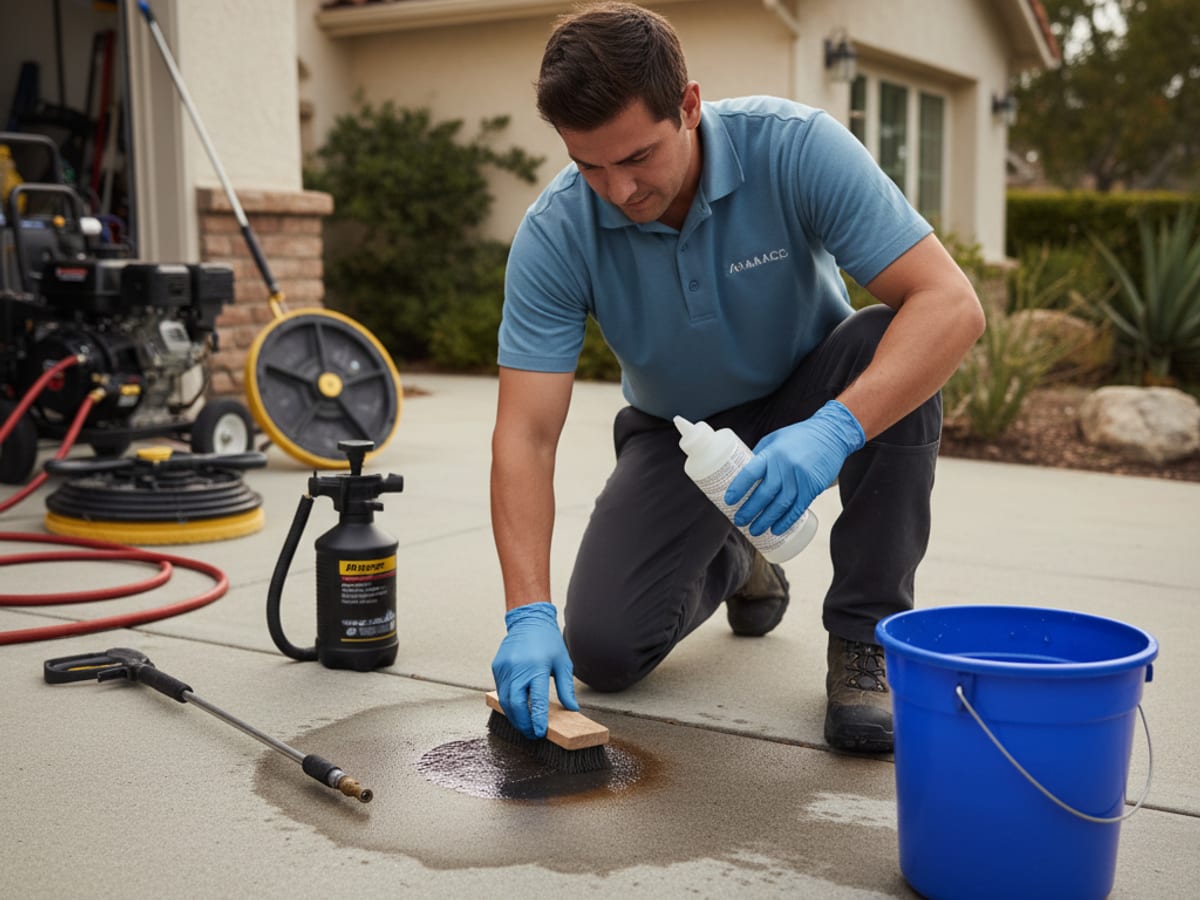
- Scrub with a stiff nylon brush, not wire, which leaves its own rust specks.
- Rinse thoroughly and check. Repeat for stubborn stains.
Light sprinkler and furniture stains usually clear in one or two rounds.
Commercial rust removers
For deep or old stains, dedicated products like F9 BARC or Singerman’s Rust Remover go further than basic oxalic. They’re built for pros and for the stains oxalic can’t finish. Same process: wet, apply, dwell, agitate, rinse, repeat. Always test a small hidden patch first, because strong removers can lighten colored or stamped concrete.
Household options for tiny fresh stains
A fresh, small rust spot sometimes responds to white vinegar or lemon juice and salt left to sit, then scrubbed. Be honest about scope, these handle a coin-sized mark, not a sprinkler fan. For anything real, go straight to oxalic acid.
What never to use
Some popular advice actively damages your concrete.
- Bleach. Does nothing to rust. It’s an oxidizer, and the iron is already oxidized.
- Muriatic acid. It will lift rust, but it etches and whitens concrete and gives off harsh fumes. Way too aggressive for a stain job.
- Wire brushes. The bristles shed and leave fresh rust flecks behind.
- Just a pressure washer. Covered above. It spreads thinned rust into a wider light stain.
Rust removal cost in San Diego
Costs swing on stain size, age, and whether it’s a flat acid treatment or a full restoration. These are realistic San Diego County ranges.
| Approach | Typical cost | Best for |
|---|---|---|
| DIY oxalic acid (product only) | $15 to $30 | Light sprinkler or furniture stains |
| DIY commercial remover (F9, Singerman’s) | $25 to $60 | Deeper or older stains, larger area |
| Pro spot rust treatment | $150 to $250 | One or two stubborn areas |
| Pro full driveway or patio with rust | $250 to $400+ | Whole-surface rust plus general cleaning |
| Concrete repair (rebar bleed) | Quote by job | Rust from corroding embedded metal |
Most homeowners can clear a light stain themselves for the price of a bottle. The reasons to call a pro: large or multiple stains, stamped or colored concrete you don’t want to risk, or rust mixed with oil and grime that needs a full clean.
A quick honesty note, complete removal isn’t always possible on very old, deep rust. Budget for 80 to 95 percent improvement on aged stains, and don’t trust anyone who promises a guaranteed disappearance sight unseen.
San Diego specifics that change the job
Stormwater rules. Acid rinse water and the dissolved iron salts can’t legally go down a storm drain in San Diego. The city’s stormwater rules require you to contain, neutralize, and dispose of wash water properly, especially with acids involved. We cover the details in our San Diego stormwater compliance guide. Doing it right protects you from fines and protects the watershed.
Hard water. San Diego’s mineral-heavy water can leave its own light staining and slows your rinse. Use the cleanest water you can for the final rinse so you don’t trade a rust stain for a calcium haze.
Coastal damp. The marine layer keeps coastal slabs wet into mid-morning, which is exactly why metal furniture leaves rings near the beach. After you remove the stain, set furniture on glides or move it off bare concrete.
HOA rules. Many San Diego HOAs require driveways and walkways kept stain-free. If you’ve got a notice, an acid treatment plus a general clean usually satisfies it. Match the finish across the whole slab so you don’t leave one bright patch.
How to keep rust from coming back
Removal is half the job. The other half is killing the source.
- Adjust sprinkler heads so overspray stops hitting concrete.
- Replace rusting galvanized irrigation parts with PVC or brass.
- Sweep up stray fertilizer before it gets watered in.
- Lift metal furniture off bare concrete, use plastic glides or feet.
- Consider sealing the concrete after cleaning, a sealer slows how fast new stains soak in.
FAQ
Will a pressure washer remove rust stains from concrete? No. Pressure removes surface dirt but rust is soaked into the pores. You need an acid like oxalic to dissolve the iron oxide, then a rinse. Pressure alone usually just spreads it into a wider light stain.
Does bleach remove rust from concrete? No. Bleach is an oxidizer and the rust is already oxidized iron, so there’s nothing for it to do. It can also lighten surrounding concrete unevenly. Use oxalic acid instead.
Is oxalic acid safe for concrete? Yes, used as directed. It dissolves rust without the heavy etching that muriatic acid causes. Wear gloves and eye protection, wet the slab first, and rinse fully. Test colored or stamped concrete in a hidden spot.
Why does my San Diego driveway keep getting rust stains? Almost always sprinkler overspray from a system with iron parts, or hard-water minerals. Fix the spray pattern and swap rusting irrigation components, otherwise the stain returns every season.
Can old rust stains be fully removed? Sometimes, but not always. Deep, aged rust may only improve 80 to 95 percent. A pro using stronger removers and multiple passes gets the best result, but be wary of anyone promising total removal sight unseen.
Is acid rinse water legal to hose into the street in San Diego? No. Acidic wash water with dissolved iron can’t go to the storm drain under San Diego stormwater rules. It has to be contained and disposed of properly. See our stormwater compliance guide.
Get the rust gone the right way
If the stain is light, oxalic acid and a stiff brush will probably handle it in an afternoon. If it’s old, large, on stamped concrete, or tangled up with oil and grime, that’s our wheelhouse. We do rust and oil stain removal across San Diego County with upfront quotes, soft-wash methods that won’t damage the slab, and stormwater-compliant disposal of every drop of rinse water.
Call us at (858) 925-5546 for a straight quote. We’ll tell you honestly what’ll come out and what won’t before we start.