TL;DR
- A round surface cleaner attachment is the single biggest upgrade for DIY concrete cleaning, it’s the only way to avoid wand stripes.
- Pre-treat with a surfactant for general grime, use a dedicated degreaser (EBC, Purple Power) for oil and grease, and F9 Barc for rust.
- Cold water works for 90% of residential concrete. Hot water is only worth it for heavy commercial grease.
- Don’t seal freshly cleaned concrete for at least 48 hours, it needs to dry all the way through.
If you’ve ever rented a pressure washer from Home Depot and spent Saturday afternoon putting stripes on your driveway, you know the feeling. The concrete looks better than it did, but not by much, and now there are obvious wand marks every two feet. The problem isn’t that you did it wrong. It’s that you used the wrong tool. Here’s how to clean concrete properly, whether you’re DIYing it or figuring out what to ask a pro to do.
Most San Diego driveways and patios need cleaning every 18 to 24 months. Inland homes collect Santa Ana dust and sprinkler overspray staining. Coastal homes get marine-layer mildew and salt efflorescence. Both respond to the same core method: pre-treat with chemistry, clean with a surface cleaner, rinse with a fan tip.
The tools you actually need
Before any cleaning, here’s the kit that separates a decent job from a bad one.
Pressure washer. For residential concrete, anything from 2,000 to 3,500 PSI at 2.5 to 4 GPM will do the job. A Ryobi 2,300 PSI electric works for a two-car driveway. A Kärcher gas unit at 3,200 PSI works faster on heavy staining. Professional Simpson and Pressure-Tek gas units run 4,000 PSI, overkill for concrete, great for everything else.
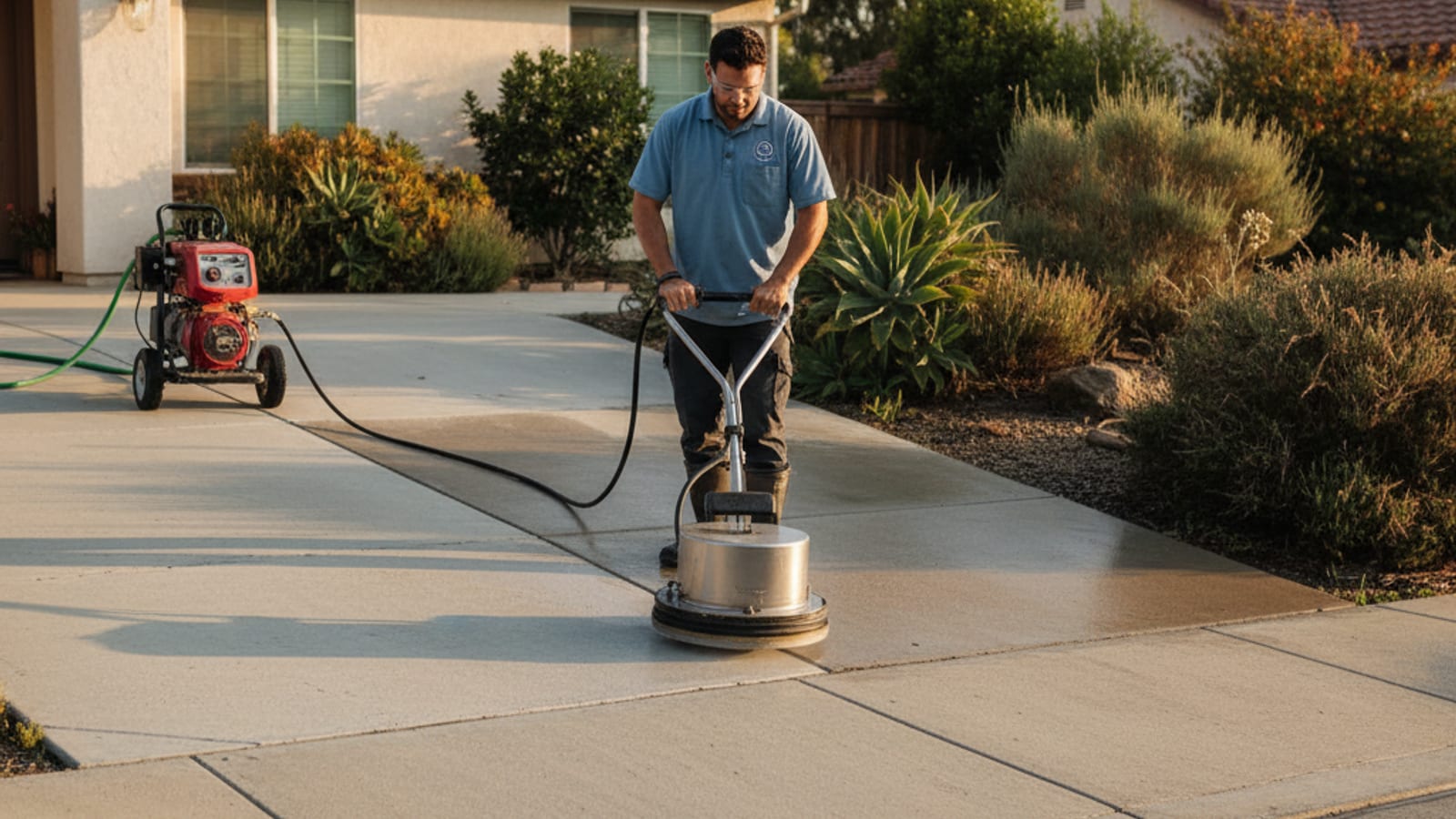
Round surface cleaner attachment. This is the one piece of equipment that actually matters. A 15-inch consumer unit (about $90 at a big-box store) or a 20-inch pro unit ($250+) fits between the wand and your trigger gun. It has two spinning nozzle arms inside a shroud that contains the overspray. The result is even, stripe-free cleaning at roughly three times the speed of a bare wand.
Fan-tip nozzle. For edges and seams where the surface cleaner can’t reach, a 25-degree green tip or 40-degree white tip is what you want. Never a zero-degree red tip, that’s a concrete-chipping tool.
Pump-up sprayer. For pre-treating. A 2-gallon plastic pump-up sprayer runs $20 and lets you apply detergents and degreasers evenly.
Detergent. For general dirt, a sodium-hypochlorite-and-surfactant mix at about 1 to 2 percent strength. Pros use a downstream injector to feed it through the pump; DIY, use the pump-up sprayer.
Degreaser. For oil stains, EBC chemistry, Purple Power concentrate, or SEO-grade sodium hydroxide-based products. Dollar-store degreaser is not the same.
Rust remover. F9 Barc is the professional standard. Oxalic-acid-based. Apply, dwell 5 to 10 minutes, rinse. Never mix with bleach.
Step-by-step: the right way to clean concrete
Here’s the sequence that gets even, professional-looking results.
1. Clear and pre-wet
Move vehicles, planters, bikes, and anything else off the surface. Sweep the concrete with a stiff push broom to get loose debris off. Pre-wet any landscaping within 10 feet of the work area, the bleach-based detergent will burn leaves if not pre-wetted or rinsed fast enough.
2. Pre-treat with detergent
Fill your pump-up sprayer with a sodium-hypochlorite-and-surfactant mix. A good starting ratio is 1 part 12.5% pool shock to 4 parts water plus a capful of surfactant (or use a pre-mixed pressure-wash detergent per label). Apply evenly across the whole area. Let it dwell for 5 to 10 minutes. Do not let it dry, mist again if it starts to flash off.
Heavy algae and mildew turn lighter as the chemistry works. That’s what you want.
3. Treat stains specifically
For oil and grease, scrub a dedicated degreaser into the stain with a stiff brush. Give it 10 minutes. Reapply if needed. Oil that’s been there for years may need two or three cycles.
For rust, apply F9 Barc per the bottle directions. Watch the stain change color as the oxalic acid reacts. When it’s lifted, rinse thoroughly with plenty of water.
Don’t mix these products. Bleach plus ammonia releases chloramine gas. Bleach plus acid releases chlorine gas. Rinse between different chemistries, full rinse, at least 60 seconds of plain water before the next product goes down.
4. Clean with the surface cleaner
Attach the surface cleaner to your wand. Hold the handle with both hands, keep the shroud flat on the concrete, and walk at an even pace, about a slow walking speed. Overlap each pass by about 20 percent. Keep the nozzles spinning the whole time; if you stop in one place, you’ll leave a darker ring.
Work in a consistent pattern. Most pros go back-and-forth along the long axis of the driveway. Don’t mix patterns, that’s how wand-stripe illusions happen even with a surface cleaner.
5. Edge with a fan tip
Swap to a 25-degree green tip for edges and expansion joints. Hold the wand at about 30 degrees off vertical, 8 to 12 inches from the surface, and move in smooth strokes. Don’t hold the tip in one spot, that’s how edges get etched.
6. Rinse everything
Once the whole surface is cleaned, do a final overall rinse with the fan tip. Rinse any adjacent landscaping. Rinse the sidewalk and street apron where dirty water has run. Leave the concrete clean, not just “mostly clean plus some runoff stripes.”
Hot water vs cold water
For residential concrete in San Diego, cold water is the right answer 90 percent of the time. The dirt, mildew, and mild sprinkler overspray staining on most driveways is organic matter that comes off with chemistry plus 3,000 PSI.
Hot water (what the industry calls power washing) is worth it when the stain is petroleum-based, commercial concrete at gas stations, restaurant dumpster pads, service stations, and mechanics shops. Hot water dissolves grease where cold water just pushes it around.
A hot-water commercial rig is a $10,000-plus purchase, which is why you don’t see them in rental yards. If you have a driveway full of oil stains from a classic car project, a single visit from a pro with a hot-water rig will outperform a full Saturday of cold-water DIY. For the full treatment and to compare a pro driveway cleaning or a comprehensive concrete cleaning quote, it’s worth getting a written estimate.
Common DIY mistakes
These are the jobs we get called out to fix the most.
Wand stripes. Using a bare wand (no surface cleaner) on a driveway. The fan pattern never evens out. Every stripe overlap shows. The only fix is to clean the whole driveway again, this time with a surface cleaner.
Zero-degree nozzle on concrete. The red-tip nozzle concentrates all the PSI into a pinhole. It etches concrete visibly within a few passes. Don’t use it on decorative concrete ever; on plain concrete, only for very targeted work.
Etched mortar in paver joints. Hitting paver joints at high pressure blows the sand out. Paver cleaning requires a surface cleaner plus re-sanding with polymeric sand (Alliance Gator or SEK) afterward. See paver cleaning for the full process.
Sealing too soon. Cleaning drives water deep into the concrete. Sealing it 24 hours later traps that water, causes a white haze within weeks, and sometimes peels the sealer inside a year. Wait a minimum of 48 hours of dry weather, ideally a week, before sealing.
Bleach on bare aluminum. Aluminum garage doors, downspouts, or trim will oxidize permanently if bleach-based detergent sits on them. Pre-wet and post-rinse anything metal near the work area.
When to call a pro
If any of these apply, save yourself the rental fee and just book the service:
- The driveway is over 1,200 square feet (that’s a full Saturday of DIY)
- Multiple oil stains or rust staining
- You want sealing done right after
- Decorative, stamped, or colored concrete (bad cleaning can permanently lighten it)
- You’ve already tried DIY and it’s striped
Our concrete cleaning service includes pre-treat, surface-cleaner pass, spot-stain treatment, and full rinse. Typical residential driveway takes 60 to 90 minutes and runs $180 to $400 depending on size and staining.
Call (858) 925-5546 or request a quote online. Upfront pricing and fast response. Serving all of San Diego County, from Oceanside down to Imperial Beach and inland to Alpine.