TL;DR
- The black streaks on asphalt shingle roofs are gloeocapsa magma: a cyanobacteria, not mildew or soot.
- It feeds on limestone filler in asphalt shingles and is fed by moisture, especially marine-layer humidity.
- The algae itself doesn’t leak water, but it shortens shingle life by keeping the roof wet longer and accelerates granule loss.
- It always streaks vertically from the peak down, because it follows rainwater flow.
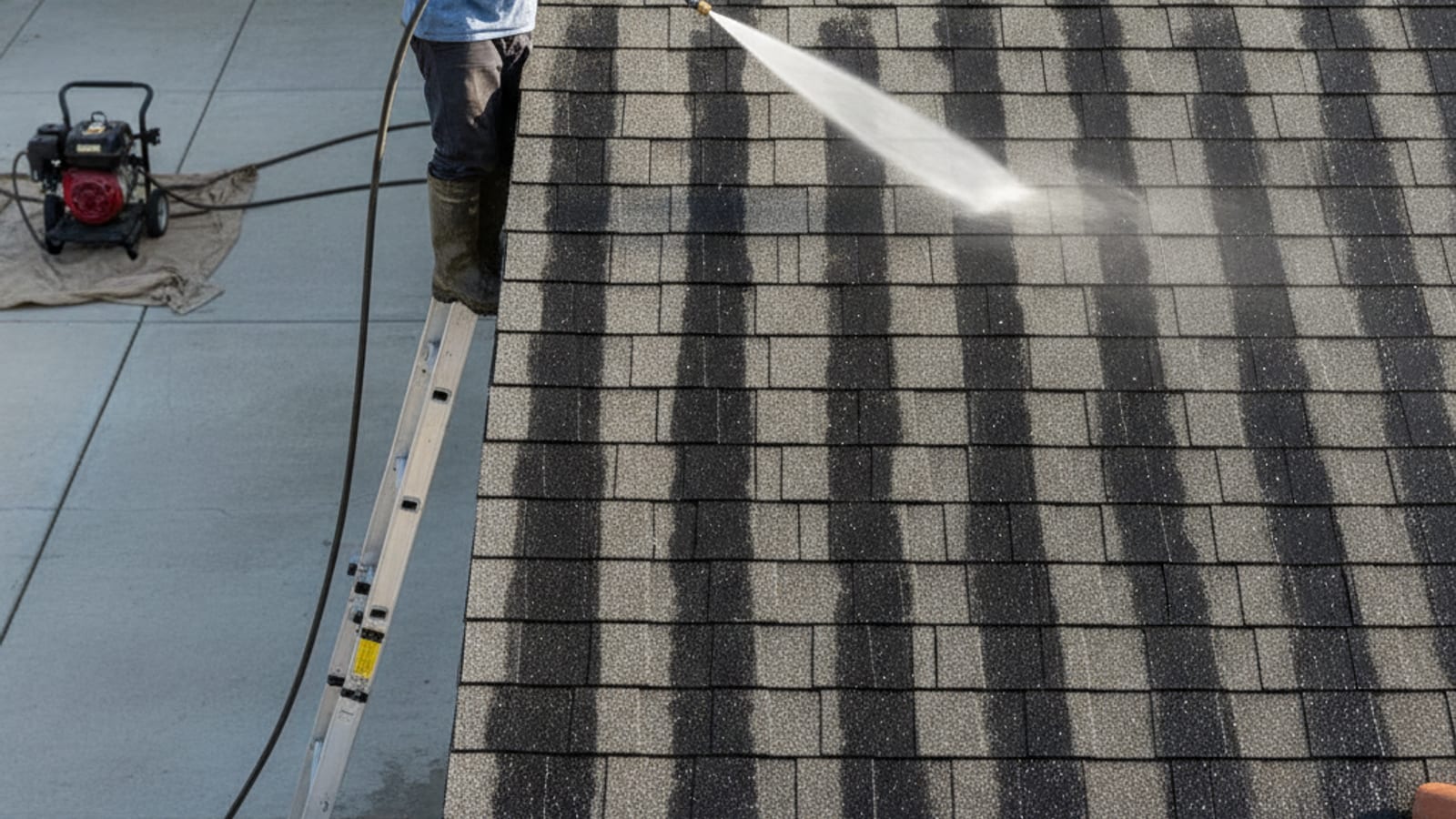
- Kill it with soft-wash chemistry (sodium hypochlorite + surfactant). Pressure washing damages the roof and doesn’t kill the spores.
- San Diego’s coastal zone (La Jolla down through Encinitas, Carlsbad, Oceanside) gets it worst, marine layer humidity is the fuel.
If your asphalt shingle roof has black streaks running down from the peak toward the gutters, you’ve got gloeocapsa magma. That’s the scientific name for the species of cyanobacteria responsible for almost every case of dark roof streaking in North America. It’s been on roofs for decades. It’s everywhere in humid climates. And in San Diego’s coastal fog belt, it’s essentially unavoidable without periodic treatment.
Most homeowners assume the streaks are soot, mildew, or plain dirt. They’re none of those. They’re a living organism that’s been colonizing your roof surface for years, and understanding what it actually is changes how you clean it, and how often.
What gloeocapsa magma actually is
Gloeocapsa magma is a species of cyanobacteria, an ancient category of photosynthetic bacteria that predates plants by billions of years. They’re related to pond algae but aren’t technically algae themselves. Biologists sometimes call them “blue-green algae” because of how they photosynthesize, but structurally they’re bacteria.
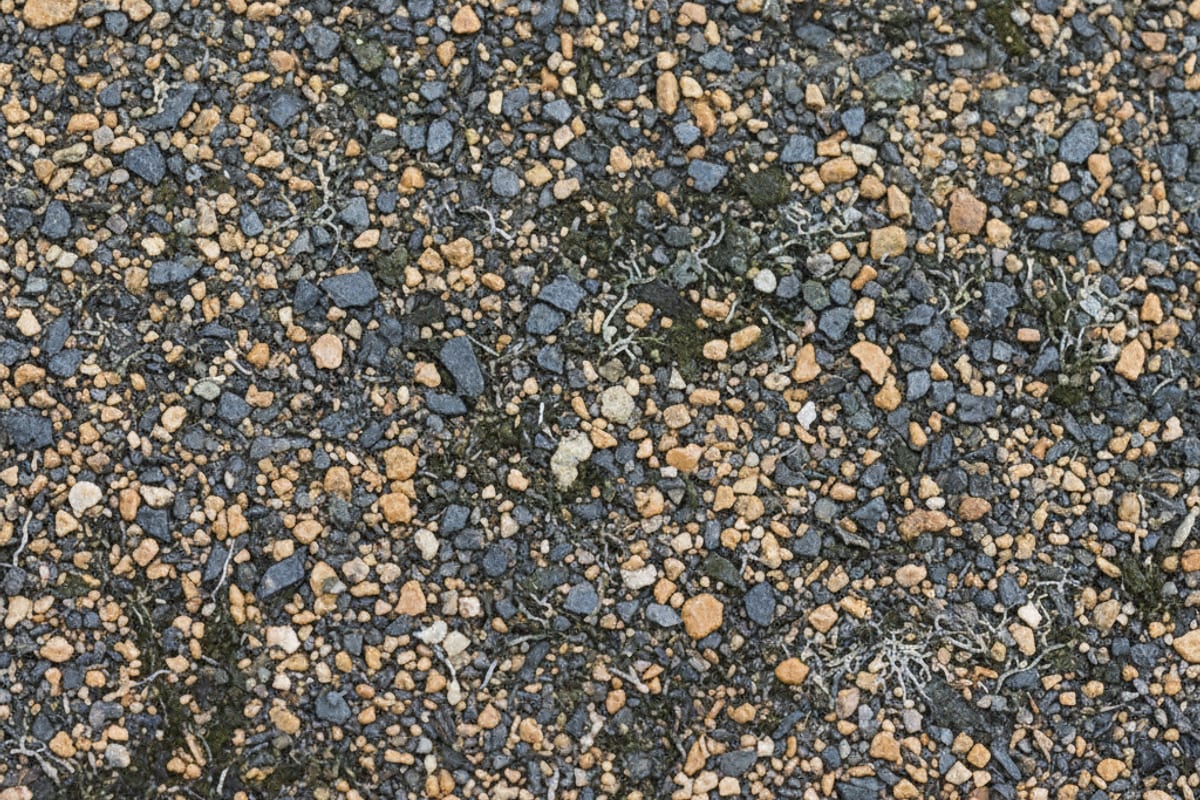
Each individual organism is microscopic. But they grow in colonies, and the colonies protect themselves from UV damage by secreting a dark pigmented sheath, essentially sunscreen. That pigment is what you see as black streaks. Up close on the shingle, it looks like a dense black-green film embedded in the texture.
These colonies have three properties that matter for roofs:
- They eat limestone. Asphalt shingles contain about 60% limestone and calcium carbonate filler. Gloeocapsa magma digests that filler over time, which weakens the shingle binder.
- They’re slow growing but persistent. A colony takes 5 to 10 years to become visible from the street. Once visible, it accelerates.
- They’re airborne. Spores travel on wind. Once one roof in a neighborhood is infected, others get infected too. This is why entire subdivisions often have matching streak patterns on matching roof angles.
Why the streaks always run downhill
You’ve probably noticed that the streaks never go sideways. They always run straight down from the peak toward the eave. That’s not coincidence, it’s because the algae spreads by following water flow.
When it rains, or when marine-layer moisture condenses on the roof in the early morning, water runs down the shingle surface from the peak toward the gutter. It carries loose algae spores with it. Those spores lodge in the granule texture of the shingles below. Over years, a single colony at the peak becomes a vertical streak that widens as it approaches the gutter line.
North- and west-facing roof sections are always worse than south and east, for the same reason: less sun, more persistent moisture, longer colony lifespan.
Why San Diego’s coastal zone is so vulnerable
Gloeocapsa magma needs three things: moisture, limestone (asphalt shingle filler), and partial shade. San Diego’s coastal strip delivers all three in abundance.
The marine layer, the persistent fog bank that sits offshore and rolls in most mornings from April through September, keeps roofs damp for 6 to 10 hours a day during the summer. That’s more moisture exposure than roofs in Phoenix or Las Vegas see in an entire year. The fog also carries salt, which holds moisture longer by hygroscopic effect.
The worst-affected San Diego submarkets:
- Oceanside, Carlsbad, Encinitas, Cardiff, Leucadia: within 2 miles of the coast, full marine-layer exposure
- La Jolla, Pacific Beach, Mission Beach, Ocean Beach, Point Loma: coastal neighborhoods, same exposure
- Del Mar, Solana Beach: persistent fog through summer
- Imperial Beach, Coronado: full coastal exposure
Homes further inland, Escondido, Poway, Santee, Alpine, still get gloeocapsa but at lower intensity because the marine layer burns off faster once it crosses I-5. Desert-edge communities like Ramona and Julian rarely show it.
Does the algae actually damage the roof?
Yes, in three ways, but more slowly than scare marketing suggests.
Granule loss acceleration. Gloeocapsa’s digestion of limestone filler loosens the bond between the ceramic granule layer and the asphalt. Streaked sections lose granules at roughly 1.5 times the rate of clean sections. Over 20 years, that can take 5 years off a shingle’s rated life.
Moisture retention. Algae-colonized shingles stay wet longer after rain or fog because the colonies themselves hold water. Wet shingles expand and contract more than dry ones, which accelerates mechanical fatigue.
Heat absorption. Black colonies absorb more heat than clean shingles. That means the attic runs a few degrees hotter in summer, which raises AC load and stresses plywood decking. Not catastrophic, but measurable over decades.
What it does not do:
- Cause leaks directly (the algae doesn’t penetrate the shingle waterproof layer)
- Attack plywood decking or rafters
- Create health hazards inside the home
So, it’s not a “call today or your roof falls in” situation. It’s more like plaque on teeth. Slow, steady damage that’s much cheaper to prevent than to fix.
Why pressure washing is the wrong answer
When homeowners see the streaks, the instinctive response is to blast them off. Pressure washing an asphalt shingle roof is the worst thing you can do to it. Two reasons.
It removes granules. 3,000 PSI against shingle granules loosens and strips them. You’ll see the gravel in your gutters after. Once granules are gone, the asphalt underneath is UV-exposed and deteriorates fast.
It doesn’t kill the algae. Pressure washing removes the visible sheath but leaves the living colonies embedded in the limestone filler. New pigment grows back within 3 to 6 months, often thicker than before.
This is why manufacturer warranties (GAF, Owens Corning, CertainTeed, IKO) void if the roof is pressure washed. ARMA, the Asphalt Roofing Manufacturers Association, has a Technical Bulletin that specifically recommends low-pressure soft-wash cleaning with sodium hypochlorite chemistry. Nothing else.
How soft-wash kills gloeocapsa properly
Sodium hypochlorite at 3% to 4% concentration kills cyanobacteria at the cellular level. The chlorine disrupts the cell membrane and destroys the pigmented sheath. Within 10 to 20 minutes of dwell, the colony is dead. Within a week of normal rainfall, the dead pigment washes away and the shingles look like new.
The full method is covered in our how to clean roof shingles without damage guide, but the short version:
- Pre-wet the roof and all landscaping.
- Apply soft-wash chemistry from the ground using a 18-to-24-foot telescoping wand.
- Dwell 10 to 20 minutes.
- Rinse with plain garden-hose pressure, top-down.
No one walks on the roof. No pressure washer touches the shingles. Landscaping stays safe with proper pre-wet.
A proper roof soft wash lasts 3 to 5 years before the streaks return. That’s 3 to 5 years of clean roof, extended shingle life, and avoided warranty issues, for $400 to $900 on most residential roofs in San Diego.
Prevention: zinc and copper strips
After a soft wash, some homeowners install zinc or copper strips at the roof peak. When it rains, trace metal ions wash down the shingle surface and inhibit cyanobacteria regrowth. It’s not a permanent fix, the ions eventually get overwhelmed by new spore load, but it can extend the cleaning interval from 4 years to 6 or 7.
This is worth it if:
- You’re on the coast and expect fast re-growth
- The roof is new and you want to protect it from the start
- You plan to stay in the house 10+ years
It’s not worth it if the roof is near end-of-life or if you’re selling in the next couple of years.
When to schedule a soft wash
The right time to clean is when you can first see the streaks clearly from the street. That’s typically 3 to 5 years from first visible stain. Letting them go another decade means more embedded colony and more granule damage already done.
Best months in San Diego: April, May, October, November. Summer can work but afternoon heat flashes off chemistry fast. Avoid the full June Gloom weeks when roofs stay wet all day, dwell is harder to manage.
For a quote on your roof, call (858) 925-5546 or text us a photo of the streaks through our contact form. Upfront pricing, fast response, and we cover all of San Diego County, from Oceanside through the coast to Imperial Beach and inland to La Mesa, El Cajon, Poway, and Alpine.